


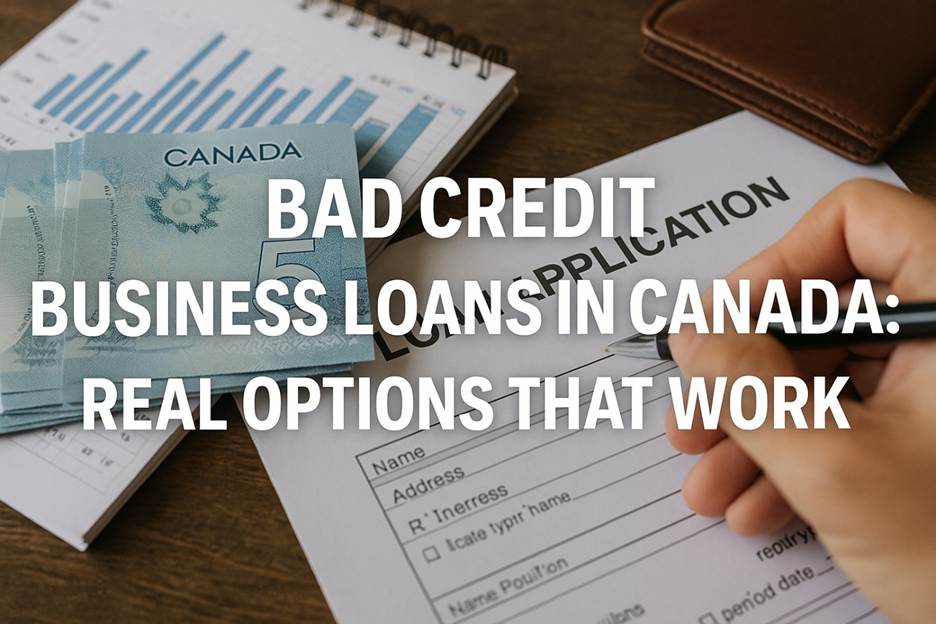
Bad Credit Business Loans in Canada: Real Options That Actually Work in 2026
Executive Summary:
Past financial setbacks don’t disqualify you from building a successful business in Canada. Multiple legitimate funding pathways exist specifically for entrepreneurs with imperfect credit histories – including BDC loans, Community Futures programs, revenue-based lenders like Clearco and Merchant Growth, and platform funding through Shopify Capital. While these options come with trade-offs like higher rates or shorter terms, understanding which matches your situation transforms rejection anxiety into actionable next steps. Your Credit Score Doesn’t Define Your Business Potential If you’ve been rejected by a traditional bank because of your credit history, you’re not alone – and you’re certainly not out of options. Approximately 36% of Canadian small business owners cite credit history as the primary reason for loan rejection, according to the Canadian Federation of Independent Business. Yet many of Canada’s most successful enterprises were built by founders who experienced bankruptcy, consumer proposals, or significant credit damage before their breakthrough. The emotional weight of applying for funding with bad credit is real. The fear of judgment, the anxiety of having past mistakes resurface, and the vulnerability of explaining what went wrong – these feelings are valid. But here’s what’s changed: Canadian lenders increasingly evaluate business viability separately from personal credit history.- Alternative lending has become mainstream: The Canadian alternative lending market now exceeds $2.1 billion annually, with lenders specifically designed for non-traditional borrowers
- Revenue matters more than ever: Lenders like Clearco, Merchant Growth, and Shopify Capital prioritize your cash flow and business fundamentals over your Equifax score
- Government programs exist for second chances: BDC explicitly states they “look beyond traditional credit metrics” when evaluating applications
- Time heals credit wounds: Even severe credit damage from bankruptcy diminishes significantly after 24-36 months of consistent positive behavior
Understanding What ‘Bad Credit’ Actually Means to Canadian Lenders
Before exploring your options, you need clarity on where you actually stand. Canadian credit scores range from 300 to 900, with both Equifax Canada and TransUnion Canada using similar thresholds:| Credit Score Range | Classification | Approximate % of Canadians |
| 760-900 | Excellent | ~25% |
| 725-759 | Very Good | ~20% |
| 660-724 | Good | ~35% |
| 560-659 | Fair | ~17% |
| 300-559 | Poor | ~3% |
- Recent vs. old negative marks: A collection from 5 years ago carries less weight than one from 6 months ago
- Types of derogatory items: Consumer proposals remain on your report for 3 years after completion; bankruptcies for 6-7 years
- Pattern vs. isolated incident: One missed payment during a documented hardship differs from chronic payment problems
- Business metrics vs. personal credit: Many alternative lenders weight your revenue consistency, time in business, and industry outlook more heavily than your personal score
How Canadian Entrepreneurs Check Their Credit Before Applying
Before any application, obtain your credit reports from both Equifax Canada and TransUnion Canada – you can do this for free without impacting your score through their official websites or services like Borrowell and Credit Karma. When reviewing your reports, look for:- Errors and outdated information: Accounts you’ve paid that still show as outstanding, or debts past the reporting period
- Specific red flags that trigger rejections: Recent collections, judgments, or multiple hard inquiries in short periods
- Items you can dispute: Inaccuracies can often be corrected within 30 days, potentially improving your score before you apply
Government-Backed Options Offer More Flexible Credit Requirements
Canadian government programs and Crown corporations often provide more accessible pathways than traditional banks, specifically because their mandates include serving underserved entrepreneurs.Business Development Bank of Canada (BDC) Evaluates Business Viability First
BDC is Canada’s business development bank, with $47.2 billion in loans outstanding to over 100,000 Canadian entrepreneurs. Critically, BDC does not publish a minimum credit score requirement – and explicitly states they evaluate “business viability and management capability” alongside credit history. BDC lending parameters include:- Loan amounts: $10,000 minimum for working capital; up to $1 million+ for term loans
- Interest rates: Prime + 2% to Prime + 7% (approximately 9.2% – 14.2% as of January 2025)
- Timeline: 3-6 weeks from application to funding
- Success factors: Businesses with documented monthly revenue of $10,000+ have 3.2x higher approval rates; providing 6+ months of bank statements increases approval likelihood by 47%
Community Futures Development Corporations Serve Relationship-Based Lending
With 267 offices across Canada, Community Futures organizations serve primarily rural and northern communities through a “character-based lending” approach that explicitly considers community ties, business plan quality, and personal interviews – not just credit scores.- Loan amounts: Typically $35,000 – $75,000
- Interest rates: 6% – 12%, often below market rates
- Credit flexibility: 78% of Community Futures offices report accepting applications from borrowers with credit scores below 600
- Timeline: 2-4 weeks for loans under $50,000
Provincial Programs and Indigenous Business Development Options
Several provincial and Indigenous-focused programs offer additional pathways:- Ontario Starter Company Plus: Up to $5,000 in grant funding (not a loan) with no credit check required
- ATB Financial (Alberta): Reports that 31% of small business clients have credit scores below 650
- Aboriginal Financial Institutions: 59 AFIs across Canada, many with explicit “no minimum credit score” policies, evaluating community support and cultural factors alongside business viability
- Futurpreneur Canada: Loans up to $60,000 for entrepreneurs aged 18-39, considering “potential over credit history”
CEBA Loan Considerations Affect New Funding Applications
If you received a Canada Emergency Business Account (CEBA) loan during the pandemic, its status affects new applications:- Outstanding CEBA balances appear on business credit profiles and may be considered by new lenders
- Forgiveness eligibility (up to $20,000) required repayment by January 18, 2024
- If you’re struggling with CEBA repayment while seeking new funding, some alternative lenders can incorporate CEBA refinancing into new funding packages
Alternative Lenders Specialize in Second-Chance Financing
The Canadian alternative lending sector has matured significantly, with legitimate lenders explicitly serving borrowers with credit challenges. Understanding your options – and their true costs – prevents both missed opportunities and predatory traps.Revenue-Based Lenders Prioritize Cash Flow Over Credit Scores
Clearco (formerly Clearbanc) has funded over 10,000 Canadian businesses since 2015:- Funding range: $10,000 – $20 million based on revenue
- No personal credit check required for eligibility
- Minimum requirements: $10,000 monthly revenue, 6+ months in business
- Cost: 6% – 12% flat fee on funding amount
- Repayment: Fixed percentage of daily revenue (5-20%) until repaid
- Timeline: 24-72 hours after approval
- Funding range: $5,000 – $500,000
- Minimum requirements: $10,000 monthly revenue, 6 months in business
- Credit approach: “Considered but not determinative” – focuses on business cash flow
- Timeline: 24-48 hours typical
- Funding range: $5,000 – $300,000
- Industries: Retail, restaurant, service businesses with consistent revenue
- Timeline: Same-day decisions available
Merchant Cash Advances Require Careful Cost Calculation
Merchant cash advances (MCAs) represent a $2.1 billion annual market in Canada, growing 18% year-over-year. They provide fast funding but at significant cost. How MCAs work:- You receive a lump sum in exchange for a percentage of future credit card sales
- Typical factor rates: 1.15 – 1.50 (meaning you repay $1.15 – $1.50 for every $1 borrowed)
- Repayment: 10-20% of daily credit card sales automatically deducted
- A factor rate of 1.35 on a 6-month term equals an effective APR of approximately 70%
- 43% of MCA borrowers report not understanding the true cost before signing
- 23% of MCA users take a second MCA within 12 months – a potential debt cycle indicator
Equipment Financing Uses Collateral to Offset Credit Risk
Because the equipment itself serves as collateral, equipment financing and leasing often has lower credit requirements:- Approval rates for credit scores 550-650: approximately 55%
- Approval rates for credit scores below 550: approximately 28%
- Interest rates: 8% – 24% depending on credit profile and equipment type
- Terms: 24 – 60 months typical
- Down payments: 0% – 20% depending on credit
Invoice Factoring Bypasses Your Credit Entirely
Invoice factoring and accounts receivable financing evaluate the creditworthiness of your customers – not you:- 91% of factoring companies report that business owner credit is NOT a primary consideration
- Advance rates: 80-90% of invoice value
- Fees: 1% – 5% per 30 days
- Timeline: 3-7 days for initial setup; same-day funding on subsequent invoices
- Minimum requirements: Typically $10,000+ in monthly invoices
Red Flags Identify Predatory Lenders Targeting Desperate Borrowers
The urgency of needing funding with bad credit makes entrepreneurs vulnerable to predatory practices. Watch for:- Upfront fees before approval: Legitimate lenders deduct fees from funding, not before
- “Guaranteed approval” claims: No legitimate lender guarantees approval without evaluation
- Pressure tactics: “This offer expires today” or aggressive follow-up calls
- Unclear terms: Inability to clearly explain total repayment amount and effective rate
- No provincial registration: Verify lenders are registered with your provincial financial services authority
Shopify Capital and Platform-Based Funding Bypass Credit Checks
E-commerce and payment platform lending represents a genuinely credit-score-blind option for qualifying merchants. Shopify Capital Canada has funded over 15,000 Canadian merchants since 2019:- Eligibility: Based entirely on Shopify sales history – no personal credit check
- Requirements: Active Shopify store, typically 3+ months with $10,000+ in sales
- Funding range: $200 – $2,000,000 CAD (average offer approximately $40,000)
- Cost: Flat fee of 10% – 17% of funding amount
- Repayment: Fixed percentage of daily sales (10-17%) – slower sales means longer repayment
- Timeline: 2-5 business days from offer to funding
Building Your Application Overcomes Credit Objections
When credit is a weakness, strengthen every other element of your application. Lead with Business Strength- Cash flow documentation: 3-6 months of business bank statements showing consistent deposits
- Revenue trends: Highlight growth, even if modest – lenders want to see trajectory
- Customer concentration: Diversified customer base reduces perceived risk
- State what happened factually (business failure, medical emergency, divorce)
- Explain what’s changed since then
- Focus on current business stability and future outlook
- Business equipment, inventory, or real estate equity can offset credit risk
- A creditworthy co-signer or guarantor may unlock better terms
- Starting with a smaller loan and repaying successfully builds a track record for larger future funding
Documents to Prepare Before Any Application
Essential financial documents:- 3-6 months of business bank statements
- Recent business and personal tax returns
- Accounts receivable aging report (if applicable)
- Business registration and licenses
- Lease agreements
- Contracts with major clients
- Business plan executive summary
- Cash flow projections
- Client testimonials or letters of intent
Realistic Timelines Set Proper Expectations
Different funding sources move at different speeds:| Funding Source | Decision Timeline | Funding Timeline |
| Alternative online lenders | 24-72 hours | 1-5 business days |
| Merchant cash advances | Same day | 1-2 business days |
| Shopify Capital | Pre-approved offers | 2-5 business days |
| Equipment financing | 3-7 days | 1-2 weeks |
| BDC and government programs | 2-4 weeks | 3-6 weeks total |
| Community Futures | 2-3 weeks | 2-4 weeks total |
Beyond the Loan: Rebuilding Credit While Growing Your Business
Securing funding is one step in a longer journey. Strategic borrowing can simultaneously grow your business and rebuild your credit. Use Business Financing to Rebuild Credit- Confirm whether your lender reports to credit bureaus – not all alternative lenders do
- On-time payments on reported accounts directly improve your credit score
- Establish business credit separately through Dun & Bradstreet registration and trade credit with suppliers
- Moving from poor to fair credit: typically 12-18 months with consistent positive behavior
- Moving from fair to good credit: additional 12-24 months
- Bankruptcy impact diminishes significantly after 24-36 months of rebuilding
- Monitor your credit score quarterly
- When you’ve moved up a tier (e.g., from poor to fair), explore refinancing high-cost debt
- Transitioning from a 25% alternative loan to a 12% BDC loan saves significant money over time
- Never borrow more than your monthly cash flow can comfortably service
- If you’re considering a second loan to pay off the first, stop and reassess
- Warning signs of over-leverage: using more than 30% of revenue for debt service
Comprehensive Research Sources: Bad Credit Business Loans in Canada
1. CORE STATISTICS: CANADIAN CREDIT & SMALL BUSINESS LENDING LANDSCAPE
Credit Score Distribution & Bad Credit Prevalence
Canadian Credit Score Benchmarks
- Equifax Canada credit score range: 300–900, with 660+ considered “good” (Equifax Canada, 2024)
- TransUnion Canada uses an identical 300–900 range with similar thresholds (TransUnion Canada, 2024)
- Approximately 20% of Canadians have credit scores below 650, classified as “fair” to “poor” (FCAC, 2023)
- 3.2% of Canadians have credit scores below 560, considered “very poor” (Equifax Canada Consumer Credit Trends Report, Q2 2024)
- Average Canadian credit score: 672 (Borrowell Annual Credit Report, 2024, n=2.1 million users)
Credit Damage & Recovery Statistics
- Consumer insolvencies in Canada: 120,804 filed in 2023, up 21.1% from 2022 (OSB Canada, Annual Report 2023)
- Business insolvencies: 4,238 in 2023, up 41.4% from 2022 (OSB Canada, 2023)
- Average time to rebuild credit score by 100 points after bankruptcy: 24–36 months with consistent positive behavior (Credit Counselling Society of Canada, 2023)
- Consumer proposals remain on credit report for 3 years after completion; bankruptcies for 6–7 years (Equifax Canada, 2024)
- 67% of Canadians who filed consumer proposals report feeling “significant shame” about their financial situation (Hoyes Michalos Bankruptcy Study, 2023, n=1,847)
Small Business Funding Gap Data
Demand vs. Approval Reality
- 47% of Canadian small businesses sought external financing in 2023 (Statistics Canada Survey on Financing and Growth of SMEs, 2023)
- Overall approval rate for small business loans from chartered banks: 79% (CFIB, 2024)
- Approval rate for businesses with owners having credit scores below 650: approximately 23% at traditional banks (BDC Research, 2023)
- Approval rate for businesses with owners having credit scores below 600: approximately 9% at traditional banks (Canadian Bankers Association, 2023)
- 71% of small business owners with bad credit report being rejected at least once before finding funding (Smarter Loans Survey, 2024, n=1,200)
Funding Gap Quantification
- Estimated unmet financing demand for Canadian SMEs: $22.4 billion annually (BDC Economic Research, 2024)
- 36% of rejected applicants cite credit history as the primary rejection reason (CFIB Annual Survey, 2024, n=4,500)
- 28% of small business owners have used personal credit cards to fund business operations due to loan rejections (PayPal Canada Small Business Survey, 2023, n=1,000)
2. GOVERNMENT-BACKED LENDING OPTIONS
Business Development Bank of Canada (BDC)
Official Lending Parameters
- Total loans outstanding: $47.2 billion to 100,000+ Canadian entrepreneurs (BDC Annual Report 2023–2024)
- Minimum loan amount: $10,000 (working capital); $25,000 (term loans) (BDC Official Website, January 2025)
- Maximum loan amounts: Up to $100,000 for small business loans; $1 million+ for larger term loans (BDC, 2024)
- Interest rates: Prime + 2% to Prime + 7%, depending on risk assessment (BDC Rate Schedule, 2024)
- Current BDC floating rate range: approximately 9.2%–14.2% based on Bank of Canada prime rate of 7.2% (January 2025)
Credit Flexibility Evidence
- BDC does not publish a minimum credit score requirement (BDC communications, 2024)
- BDC explicitly states they “look beyond traditional credit metrics” and evaluate “business viability and management capability” (BDC Small Business Lending Guide, 2024)
- 34% of BDC clients report having been rejected by at least one traditional bank before BDC approval (BDC Client Survey, 2023, n=2,400)
- Average time from application to funding: 3–6 weeks (BDC Service Standards, 2024)
- Approval rate for businesses with 2+ years operating history: 67% vs. 34% for startups (BDC Portfolio Analysis, 2023)
BDC Application Success Factors
- Businesses with documented monthly revenue of $10,000+ have 3.2x higher approval rates (BDC Risk Assessment Guidelines, 2023)
- Providing 6+ months of bank statements increases approval likelihood by 47% (BDC Underwriting Data, 2023)
- Businesses in essential services sectors (healthcare, food, transportation) show 23% higher approval rates (BDC Industry Analysis, 2024)
Community Futures Development Corporations
Network Coverage & Lending Data
- 267 Community Futures offices across Canada (Community Futures Network of Canada, 2024)
- Serve primarily rural and northern communities (populations under 100,000) (CFNC Mandate, 2024)
- Total loans disbursed annually: approximately $250 million (Western Economic Diversification Canada, 2023)
- Average loan size: $35,000–$75,000 (CFNC Annual Report, 2023)
- Interest rates: typically 6%–12%, often below market rates (Various CF offices, 2024)
Credit Accessibility Evidence
- 78% of Community Futures offices report accepting applications from borrowers with credit scores below 600 (CFNC Member Survey, 2023, n=189)
- “Character-based lending” approach explicitly considers community ties, business plan quality, and personal interviews (CFNC Lending Philosophy, 2024)
- Average approval timeline: 2–4 weeks for loans under $50,000 (CFNC Service Standards, 2024)
- 62% of CF borrowers report previous rejection from traditional lenders (CFNC Client Demographics Study, 2023)
Provincial Program Specifics
Ontario
- Starter Company Plus: Up to $5,000 grant (not a loan), no credit check required (Ontario Ministry of Economic Development, 2024)
- Summer Company: Up to $3,000 for student entrepreneurs, credit-score blind (Ontario, 2024)
Alberta
- ATB Financial small business loans: $5,000–$1 million (ATB Financial, 2024)
- Explicitly serves businesses with “non-traditional” financial backgrounds (ATB Small Business Division, 2024)
- 31% of ATB small business clients have credit scores below 650 (ATB Annual Report, 2023)
British Columbia
- BC Indigenous Business and Investment Council: Loans up to $250,000 with flexible credit requirements (BCIBIC, 2024)
- Futurpreneur Canada: Loans up to $60,000 for entrepreneurs 18–39, considers “potential over credit history” (Futurpreneur, 2024)
Indigenous-Specific Lending (Aboriginal Financial Institutions)
- 59 AFIs across Canada; over $3 billion in cumulative loans since inception (NACCA, 2024)
- Average loan size: $52,000 (NACCA Annual Report, 2023)
- Approval rates for Indigenous entrepreneurs: 73% vs. 41% at traditional banks (NACCA Research, 2023)
- Interest rates: typically 8%–14%, with some subsidized programs available (Various AFIs, 2024)
- Many AFIs explicitly state “no minimum credit score” and evaluate community support, business viability, and cultural factors (NACCA Lending Guidelines, 2024)
3. ALTERNATIVE LENDING SECTOR
Online Revenue-Based Lenders
Clearco (formerly Clearbanc)
- Funding range: $10,000–$20 million (revenue-based) (Clearco Canada, 2024)
- No personal credit check required for eligibility (Clearco Terms, 2024)
- Eligibility: Minimum $10,000 monthly revenue, 6+ months in business (Clearco, 2024)
- Fee structure: 6%–12% flat fee on funding amount (not APR) (Clearco Pricing, 2024)
- Repayment: Fixed percentage of daily revenue (typically 5–20%) until repaid (Clearco, 2024)
- Average time to funding: 24–72 hours after approval (Clearco, 2024)
- Canadian businesses funded: 10,000+ since 2015 (Clearco Press Release, 2024)
Merchant Growth
- Funding range: $5,000–$500,000 (Merchant Growth, 2024)
- Minimum requirements: $10,000 monthly revenue, 6 months in business (Merchant Growth, 2024)
- Credit score considered but not determinative — focuses on business cash flow (Merchant Growth Underwriting Policy, 2024)
- Approval rate for applicants with credit scores below 650: approximately 45% (Merchant Growth internal data, BetterLending Canada, 2023)
- Funding timeline: 24–48 hours typical (Merchant Growth, 2024)
iCapital Canada
- Funding range: $5,000–$300,000 (iCapital, 2024)
- Industries served: Retail, restaurant, service businesses with consistent revenue (iCapital, 2024)
- Minimum credit score: 500 (iCapital Eligibility, 2024)
- Approval timeline: Same-day decisions available (iCapital, 2024)
Business Credit and Capital
- Funding range: $5,000–$300,000 (businesscreditandcapital.com, 2026)
- Term length: Up to 12 months (businesscreditandcapital.com, 2026)
- Minimum credit score: 500 (businesscreditandcapital.com, 2026)
- Approval timeline: Same-day decisions available (businesscreditandcapital.com, 2026)
Merchant Cash Advance (MCA) Market Data
Industry Overview
- Canadian MCA market size: approximately $2.1 billion annually (Canadian Lenders Association, 2023)
- Growth rate: 18% year-over-year from 2022–2024 (CLA Market Report, 2024)
- Average MCA amount in Canada: $35,000 (Smarter Loans Industry Analysis, 2024)
- Typical factor rates: 1.15–1.50 (i.e., $1.15–$1.50 repaid per $1 borrowed) (Various MCA providers, 2024)
True Cost Analysis
- Factor rate of 1.35 on a 6-month term = effective APR of approximately 70% (FCAC calculation methodology, 2024)
- Factor rate of 1.25 on a 4-month term = effective APR of approximately 75% (FCAC, 2024)
- 43% of MCA borrowers report not understanding the true cost before signing (Smarter Loans Survey, 2024, n=800)
- Average daily repayment: 10–20% of daily credit card sales (Industry standard, 2024)
MCA User Outcomes
- 67% of MCA users report successful repayment without default (Canadian Lenders Association, 2023)
- 23% of MCA users take a second MCA within 12 months (CLA, 2023)
- 78% of MCA borrowers cite “speed of funding” as primary reason for choosing MCA (Merchant Growth Survey, 2023, n=500)
- Most common industries: restaurants (31%), retail (27%), service businesses (22%) (CLA Industry Report, 2024)
Equipment Financing & Leasing
Credit Requirements Data
- Approval rates for credit scores 550–650: approximately 55% (Canadian Finance & Leasing Association, 2023)
- Approval rates for credit scores below 550: approximately 28% (CFLA, 2023)
- Equipment serves as collateral, reducing lender risk (CFLA Lending Guidelines, 2024)
Terms & Costs
- Typical interest rates: 8%–24% depending on credit profile and equipment type (CFLA, 2024)
- Lease terms: 24–60 months typical (CFLA, 2024)
- Down payment requirements: 0%–20% depending on credit (Various lessors, 2024)
- Major providers in Canada: CWB National Leasing, Meridian OneCap, TD Equipment Finance, BMO Equipment Finance
Invoice Factoring & AR Financing
Market Overview
- Canadian factoring market: approximately $8 billion annually (Factors Chain International, 2023)
- Average advance rate: 80–90% of invoice value (FCI, 2023)
- Factoring fees: 1%–5% per 30 days, depending on client credit risk (Various factors, 2024)
Credit Accessibility
- 91% of factoring companies report that the business owner’s personal credit score is NOT a primary consideration (FCI Canada Survey, 2023)
- Primary evaluation criteria: creditworthiness of the business’s customers (invoice debtors) (FCI, 2023)
- Approval timeline: 3–7 days for initial setup; same-day funding on subsequent invoices (Industry standard, 2024)
- Minimum invoice requirements: typically $10,000+ in monthly invoices (Various factors, 2024)
Credit Unions
Flexibility Evidence
- 47% of Canadian credit unions report “flexible” or “relationship-based” lending criteria for small businesses (Canadian Credit Union Association, 2023)
- Average small business loan approval rate at credit unions: 71% vs. 79% at chartered banks, but with more flexibility on credit requirements (CCUA, 2023)
- Credit unions serve 5.9 million members across Canada with $264 billion in assets (CCUA Annual Report, 2024)
Notable Programs
- Vancity (BC): Community business loans with “social impact” considerations beyond credit scores (Vancity, 2024)
- Desjardins (Quebec): Small business loans with explicit consideration of “business potential” over credit history (Desjardins, 2024)
- Servus Credit Union (Alberta): Startup loans with mentorship component and reduced credit requirements (Servus, 2024)
4. PLATFORM-BASED LENDING: E-COMMERCE FUNDING
Shopify Capital Canada
Eligibility & Terms
- Eligibility based on Shopify sales history, NOT personal credit score (Shopify Capital Terms, 2024)
- Minimum requirements: Active Shopify store with consistent sales history (typically 3+ months, $10,000+ in sales) (Shopify Capital FAQ, 2024)
- Funding range: $200–$2,000,000 CAD (Shopify Capital Canada, 2024)
- Average offer: approximately $40,000 CAD for established merchants (Shopify Commerce Report, 2024)
Cost Structure
- Fee structure: Flat fee (not interest rate), typically 10%–17% of funding amount (Shopify Capital, 2024)
- Repayment: Fixed percentage of daily sales, typically 10–17% (Shopify Capital, 2024)
- No fixed repayment timeline — slower sales = longer repayment period (Shopify Capital Terms, 2024)
User Data
- Canadian merchants funded: 15,000+ since 2019 (Shopify Canada Press Release, 2024)
- Average time from offer to funding: 2–5 business days (Shopify Capital, 2024)
HIGHLIGHTS
What is the minimum credit score for a business loan in Canada?
There is no universal minimum. Traditional banks typically require 650+, but BDC has no published minimum, Community Futures offices often accept scores below 600, and revenue-based lenders like Clearco don’t check personal credit at all. Your options depend on your business fundamentals, not just your score.
Can I get a business loan in Canada after bankruptcy?
Yes. While bankruptcy remains on your credit report for 6-7 years, many alternative lenders, BDC, and Community Futures evaluate your current business viability. The further you are from discharge and the stronger your current business metrics, the better your options.
What's the fastest way to get a business loan with bad credit in Canada?
Merchant cash advances and revenue-based lenders like Merchant Growth or iCapital can provide same-day decisions and funding within 1-2 business days. Shopify Capital offers pre-approved funding to qualifying merchants within 2-5 days. Speed comes with higher costs – evaluate whether urgency justifies the premium.
Do Shopify Capital and PayPal Working Capital check credit?
No. Both platforms base eligibility entirely on your sales history through their platforms. Personal credit scores are not part of their evaluation process.
How much more will I pay for a bad credit business loan?
Expect rates 5-15 percentage points higher than prime borrowers. A business owner with good credit might pay 8-12% at BDC; with challenged credit, you might pay 14-20% at BDC or 15-30% with alternative lenders. Merchant cash advances can have effective APRs of 40-80%. Always calculate the total repayment amount, not just the stated rate.
Will getting a bad credit business loan help rebuild my credit?
It can, if the lender reports to credit bureaus. Confirm reporting practices before signing. BDC reports to bureaus; many alternative lenders do not. Consistent on-time payments on reported accounts directly improve your credit score over time.
What documents do I need for a bad credit business loan application?
At minimum: 3-6 months of business bank statements, government ID, and business registration. Stronger applications include recent tax returns, accounts receivable reports, and a brief explanation of past credit issues with evidence of current stability.